
Build Confidence with Hunger and Fullness Instincts
December 1, 2025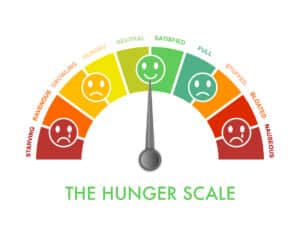 We are all born with a natural instinct to eat when our bodies need fuel and stop when those needs have been met. Environmental experiences, such as being taught to finish all the food on the plate so it doesn’t goes to waste, can “blur” these natural instincts and make it harder to tell when you have reached the point of satisfaction at a meal. Relearning your body’s cues can be tough, but with practice it can be achieved.
Using a hunger/fullness scale, like this one, can help monitor how your body is feeling.
How to use the scale:
Check in with your body before a meal to see where on the scale you are at. If you are starting the meal at a level 4 (lightly hungry) then that may be a signal that the meal will meet your needs and you may not need seconds. If you are starting the meal at a level 2 or 3 (hungry to very hungry) then that may be a sign that you will likely finish your meal and may need seconds to reach a point of satisfaction.
At the halfway point of the meal, check in and see where you are at. Are you satisfied and done with the meal? Or are you not satisfied yet and need to keep going?
Then at the end of the meal check in with how you are feeling. Are you at a level 7 or 8 (satisfied or comfortably full)? Or are you at a level 6 (lightly satisfied)? This is a good indicator to see when you will likely need to eat again. If you are ending a meal at a level 6, you may need to get seconds or have a snack in about an hour. If you are ending a meal at a 7 or 8, you will likely be content for 3-4 hours. If you are not hungry 5+ hours after a meal, this can be a sign that you may have passed a comfortable level of fullness and were at a level 9.
This can really come into play at restaurants or social gatherings where you may not be in control of the portions or you are enjoying delicious food that you do not get every day. If you notice that you are feeling full, but are having a hard time stopping because the food is so delicious, try putting your fork down, take a breath and sip of water, and make a plan to take a few more bites of the meal. Make sure you are staying mindful and focusing on the taste, smell, and mouthfeel of the food. Remind yourself that you can have more later and that this meal served its purpose and provided you with nourishment and enjoyment.
Something as simple as checking in with your body before a meal and thinking, “how hungry am I?” Can be a signal to the body to shift from “fight or flight” to “rest and digest”. Small check-ins with your body help build awareness, and thus confidence, with your body’s natural instincts.