
How to Strengthen Your Dolphin Kick with a Dr. Suess Rhyme
October 19, 2026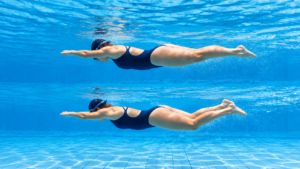 The dolphin kick is arguably one of the most challenging and taxing of the kicks to complete efficiently in competitive swimming. Although it is the driver of the butterfly stroke, it is used in every swimming race. This kick is driven by an individual’s core muscles and can be the difference between clinching or losing a lead. What if I told you that the key to completing a strong and efficient kick can be remembered by a rhyme created by Dr. Suess?
Dr. Suess’s famous rhyme, “One fish, two fish, red fish, blue fish,” is one at which most all of us grew up hearing. This catchy rhyme can also be used to remember the important features of the dolphin kick. The modified rhyme goes in a similar fashion: “Front kick, back kick, both kicks, fast kicks.”
The “front kick” portion of the phrase refers to the downward movement of the dolphin kick. This movement begins primarily at the upper abdominals to move the legs downward. This kick
feature is finished when the toes point toward the bottom of the pool. The motion created in the “front kick” should be a smooth, purposeful wave motion; the power travels first from your chest
and core into your hips, legs, and feet. You should imagine that you are pushing a column of water toward the bottom of the pool.
The “back kick” portion of the phrase refers to the upward movement of the dolphin kick. This portion of the kick moves the heels upward through the use of core and lower back muscles. When practicing the “back kick,” you can imagine that you are pushing a column of water toward the surface. Swimmers should avoid bending just at the knees. Instead, focus on keeping the movement continuous and allowing the motion to travel naturally through the entire body.
The “both kicks” portion of the phrase is a reminder that an effective dolphin kick is not simply one movement. The downward and upward portions work together to create continuous movement in order to travel in the horizontal direction. Swimmers should focus on making the kicks connected and rhythmic. In order to be efficient, both of the kicks should be equally as strong.
Finally, the “fast kicks” phrase reminds swimmers that the goal is not simply to make the largest kick possible, but to travel through the kick progression quickly. Fast does not mean disjointed though. The most effective dolphin kick combines strength, timing, and speed.
One of the best ways to improve your dolphin kick is to practice each component individually before putting everything together. Start with streamlined dolphin kicks underwater. Each time you practice, focus on a different aspect of the kick. Pay attention to whether the movement travels smoothly through your entire body. Once you feel confident, work on increasing the speed of your kicking movements.
The next time you practice your dolphin kick, remember the rhyme: “front kick, back kick, both kicks, fast kicks.” A simple phrase can help you remember the basic mechanics while you focus on building a stronger and faster kick. Sometimes the best way to remember something is to make it fun.